This Friday, we managed to take one enormous step toward another essential family goal that had been started four years ago.
It feels scary, overwhelming, and incredible all at once. Looking at such numbers, it gave me goosebumps to see, countless times, how Allah made many things possible beyond calculation.
Life over the past ten years has been quite hard to explain and make sense of. The ups and downs, the highs and lows, they were all incredibly amazing. The Best Life Planner and Designer beautifully crafted every detail.
The roads we have traveled are rarely easy. In fact, there have always been external and internal situations to deal with throughout the years we asked for and pursued huge things in life.
Since I really get used to dealing with hard things, I feel insecure and think it’s fishy when things are easy😅.
What keeps me grounded is knowing and comprehending that in Islam, trials don’t always look like turbulence. It can be disguised in many forms, including what we see as blessings.
Tried my best not to tie everything we received to the efforts we have made. I feel more peace when I reframe things and zoom out, giving credit where it’s truly due. Not because of our efforts, not because of our good deeds, but it’s simply because Allah has always been The Most Merciful and the Most Powerful to allow us to make it and be where we are. Efforts and good deeds matter at some point; doing our math right is important, but they don’t make much difference without His approval.
In pursuing many of my life goals from my 20s through the 40s, those are when I experience the lessons of tauhid in real life. In witnessing how this life journey sails, I experience how the wind brings us to many ports and stops to allow us to fetch a bit of this and that, lessons here and there, then brings us to where we are supposed to be, more often than not, it has always been better than the initial request.
Bismillah for everything onwards. May Allah make it easy and keep us on the straight path, protect us at every step of the way, and throughout the journey.
In my childhood, I read many books. My mum enrolled me to kindy early because I started reading newspaper at three. In my primary to adolescent years, I was placed to undergo life skills training and character development disguised as piano lessons. Years later I realized, that 13 years were the time where I started asking, exercising, and putting my trust to The One who deals with all affairs in order to survive the jungle. In my 20s, I lived alone and wrote some dreams, In my 30s, I went through a series of life experiences that exceeded my imagination, the best and the worst. Executing several written dreams, that were fulfilled according to Allah’s will. More than I had asked for.
Entering my 40s, I began to see things more clearly and found the missing pieces of certain stories. Things that I previously couldn’t comprehend start revealing the other side of their stories—answering all the whys one by one.
Every decade has its own training that, when skipped, we carry the consequences into the next one. Completing all the necessary training doesn’t guarantee a problem-free life. However, at least you have the tools and certain level or readiness to deal with it compared to someone who doesn’t, and it matters.
Every prayer has its own unique twist and turn. Along with everything that we pray for, don’t forget to also ask for the readiness to deal with it when it’s answered. Asking something and ready to deal with the consequences of your prayer require two completely different skill sets.
Getting rich is hard but doable with certain skills. Staying wealthy? It is not for everyone.
Finding a life partner is complicated. Maintaining marriage? It is arduously difficult.
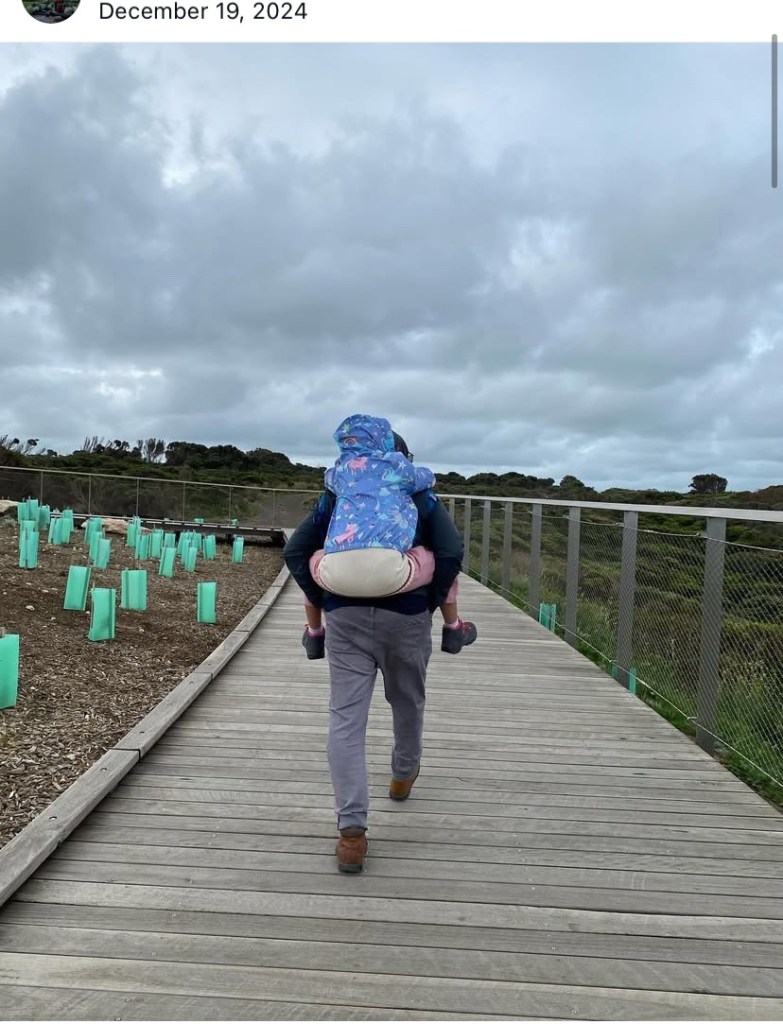
The idea of having children seems happy and lovely. Raising them right and well? That’s a whole different story.
I learned that a blessing is not only about what you gain, but also lies in the loss. Barakah is not only what Allah adds to your life, but also what has been subtracted from it. All the delays and closed doors are part of the protection. It takes constant practice to understand this.
Life is lesson that comes with some tests without warning.
The only way to thrive,not just survive,in any seasons and lesson, you have to love learning.
A huge milestone in the 40s : after bailing out for few times due tp unmatched schedule (really??), mustered the courage to attend arisan ibu-ibu in a house ten steps away from home.
Social skills seem to be one skill I keep refining (in my own way) yet never fully bloomed let alone mastered. Combination thick blood introverted and borderline neurodivergent, already accepted and make peace with it that this is something that doesn’t come naturally for neurodivergent individuals (like me and my daughter). We’ll keep trying as reasonable as we can.
Being the youngest in the circle turned out to be an advantage. My nerve always feels safer being around the wisdom and kindness of older people. It suits my old soul better (another similarity to my daughter).
It was a nice soirée with enjoyable conversation and tolerable duration.
I realized this during my 20s, specifically on the day my mother left.
From outside, my family looks ordinary, stable and steady. It’s functional enough to sustain certain level of performance.
But, inside? Well, not so much. It’s getting clearer as years go by. As the members are getting older, the true colors are getting exposed.
(Few days after writing this, found this theory and it feels so relatable).
When my mother left, I realized how strong the emotional scaffolding she endured for many years to keep the family together. At certain point, I believed she paid it with her health. If there’s an idea that I am still holding on to is how unfair it had been for her.
After she left, I was unconsciously picking the role. Like feeling responsible to continue what my mother had been doing because life must go on. We might be grieving personally, but, I took the heaviest responsibility, as a first born daughter. I became the new emotional scaffolding of the family thinking it was the only way to keep going.
Picking up without thinking, just like sleepwalking.
I saw how I exactly treated, like we treated my mother. It felt even worse since I was dealing with all men household. Maybe not openly or consciously, but the feeling of taken for granted and lack of appreciation were valid.
I slowly woke up once I had a daughter.
I knew and had quite knowledge on child development, parenting, etc. I graduated and got a master degree in Curriculum and Instruction which learned a lot about human development and psychology. In theory, I felt like a well-prepared mother.
However, in reality, it wasn’t that simple and easy. In real life situation where many things happened beyond my control, I couldn’t fight what has been programme in my subconscious mind for many years. No matter how much I try to not to repeat few things that I don’t want to do to my kids, it’s really really hard to avoid it.
My to-go response or reaction was exactly what I received growing up. I couldn’t escape what my body kept score and stored.
The first four years of marriage and motherhood, in my childhood, home were the hardest battle in adulthood.
But, if there is one thing that I realized I have since I was little : I almost always refuse to just accept anything that doesn’t work without proper fight. I want to see why it doesn’t for now and how it will or might do so later.
What happened when you keep trying to find a way, the way will show itself. Allah has been beyond kind to me and my little family. He moved us, broadened our view, and showed us a way out through a series of events that at first looked like an unfortunate one, but that was actually leading to much, much better outcomes than what I had prayed for and planned.
It’s really true that you need change of view to change your point of view. But, I see in some people, change of point view only lasts as long as the view stays. Once they go back with the old view, the POV shifts back.
Change of view to the level of change of behavior is completely hard. It against your will. The brain hates it until it becomes familiar.
As we moved places, meeting people, learning better, I felt like things were slowly improving from the inside. It’s not a sudden lightning strike. I learn little by little. From professional visit as a couple and parents, forming daily habits as family, and as a person, small changes that are quietly compounding and slowly adapting to our daily life.
It doesn’t mean we have a problem-free life. It’s the way we deal with problems that feels different now. It’s when I understand such thing is one of the most underrated forms of Rizq.
Friction arises when I have to deal with some people I grow up with. It is unavoidable to notice the difference in frequency and mindset now, creating a significant gap in how we see our problems. Growing up together as family/friends doesn’t mean you’ll always be compatible with each other over the years.
I often read things like this in the literature, but facing it in real life is really baffling. I even conclude, at a certain level, practising syariah (things done related to worship Allah) feels easier than muamalah (things to deal with other humans).
Being a mother without my mother makes me understand her more in a most tender way although there are some wounds that still stings. But, in general, I am all for her. She bore too much more than we, her family, acknowledge. We didn’t give her enough credit when she was still here.
I have many qualities of my mother, not only self-proclaimed, but, confirmed by others. But, I am not her and will never be her. And I don’t want to be her or have to be like her.
That thinking is one of the triggers that makes me decide not to go where she was.
I slowly detach many ideas that I unconsciously adopt from her that doesn’t fit me and my situation and form my own thinking in dealing with many things in life. I I let go of values that don’t align with my own self and the family I want to raise. I keep and hold on to ones that serve as a strong foundation and be forever grateful for that.
But, I don’t want to be responsible for others lack of emotional regulation, except for my current teenager daughter. I see how cunning people can be, and I don’t want to play along. I let people misunderstand me a lot of time, because I realize people can only see from where they are and actually, there is no responsibility to explain it too.
Sometimes, maintaining distance is the right way to maintain a relationship.
I am still doing a lot of trial and error to this day. A true healing is brutal. The road is tough and rough.
This is another form of grieving that is rarely heard and I am currently taking a class on the subject.
We mostly inherit the idea of marriage from our close family, society, like it is a milestone that everyone should arrive at in certain point of their life.
For someone who enjoys being alone and realized it at pretty young age, I once threw a question to my mother, when I was in my 20s : “Emang harus ya nikah?” (Is it really necessary to get married?)
It wasn’t a kind of bitter question against marriage, I was just simply questioning the idea whether it was necessary to get married. My mom was responding in a neutral way telling me there was a lot of advantages to be married.
I couldn’t ask further questions and longer conversation since it was morning where we had to get ready to go to work.
I actually never against marriage because being a mother was clearly written as an item in my little dream book. To achieve that, being in a legal relationship called marriage is a must.
I used a lot of brainstorming with myself before marriage. Five compulsory preferences and few optional ones. Having conversations with plenty of people, observing real life cases, and taking notes what I wanted and I didn’t want based on what I saw.
I concluded the importance of one thing before getting married :
I need to like the person first, and more than I love him.
For me, like is stronger and more solid foundation than love. While love mostly comes from feeling, like comes more from thinking.
Like means you approve of the basics of what you see from the other party. The character, the values, and the person as a whole, and the alignment of what he has with mine.
We need to like the person we married first, without adding or subtracting anything to the equation, and liking them as they are. When you’re asked, “Without any strings attached, would you be friends with this person?” the answer is an absolute yes.
I am lucky enough to know and build a friendship with the person I married since we were young. No title, no income, no job, just a clueless confused but full of conviction boy who was trying to figure out his life.
Having been in a marriage for thirteen years, I quite agreed with my mother’s answer. From my perspective, marriage offers many advantages across many aspects of life.
One thing I am most grateful for is that it gives me time, space, and energy to practice my beliefs in a safe environment. I am allowed to learn, practice, and apply those beliefs through the roles I have in marriage.
Such a positive tone might be misleading assuming things were, are and have always been easy.
Anything related to humans has never been. Last year’s reflection in one of my social media posts said :
Nothing good in life comes easy. So does a good marriage, I guess.
Marriage in Islam is considered as the longest form of ibadah and Ibadah is always a hard work.
Just like doing five prayers a day demands discipline. Paying monthly Zakat requires honesty, sincerity, and commitment. Fasting needs the self control and emotional regulations. Hajj asks to prepare our financial, physical, and mental strength before doing it. They are exactly what marriage takes not only to survive, but also insya Allah to thrive.
A long term relationship is a continous hard work, facing conflict and challenge while choosing to show up and willing to repair quickly and continually.
Easier written than done obviously.
I am beyond grateful for the chance to be in in a group work in a small classroom to figure out the answers to a simple worksheet in an English class then to work on many life assignments in this world, and for the hereafter, together.
I pray wholeheartedly for continous blessing, more barakah and peace this partnership brings.
Amin. Amin. Amin.
PS : this is just a two cents from many obversation and real life experience. In my opinion, men and women have different need in marriage. Men need wife (or woman) to live. Women needs life. To live is a verb. It can change depends on time. Life is a noun. It’s constant. Not change depends on time or season. It just again my two cents observing why older women rarely re-marry after the first one ended (for any reasons) and could still thriving, yet man, most of them, could enter the next one as quickly as it’s allowed to be, to keep surviving.
PS 2 : Few days after publishing this post, this one came.
This year’s noise has been among the most overwhelming. All in personal, national, and global levels. It feels like having overstimulation inside out.
The brain seems to have taken on too many duties and is unable to stop processing a wide range of circumstances that occur in sequence or simultaneously throughout the year.
Keep trying to make sense of things that happened beyond my shallow comprehension. Try to rationalize the behavior that I thought was impossible to perform by a supposed decent human being.
In another lane, witnessing how a 20-year difference can really pass by, and how it’s really possible for one not to move an inch from where they were. But, things are never static. Things that I call not moving, it is actually moving, but, instead of progressing, they are regressing.
Being 20 years older and regressing without realizing it.
It disturbed me more than I realized. I have been talking to myself about what actually bothers me.
I haven’t figured out the answer but found a similarity in all these examples.
“Learned helplessness is a psychological state where you believe you have no control over what happens to you. This occurs after a person has repeatedly experienced stressful, uncontrollable events, leading to a feeling that your actions don’t matter”.
I understand change is hard. But not until this year did I see what life could be like if we really neglect the homework that should be done, skip the training that should be learned, and keep walking without a compass or clear direction. It could bring you literally anywhere before you realize you’re actually lost. Like you have no idea where you are, and it is a point of no return.
What’s worse, even after you realize it, you still don’t know where to go, because you’ve been accustomed to living a life without thinking for many years.
For someone who often suffers because whose brain couldn’t stop and doing too much thinking, it’s perplexing.
One who is regressing is actually asking the same question as one who is progressing: “How do I end up here?” Only with different tones. One with astonishment, while the other with confusion.
I have been searching for the root of learned helplessness other than stress and trauma. Is it possible because of multiple bad decision-making that keeps compounding? One bad decision-making that is not bothered to be fixed?
The level of thinking greatly influences decision-making, and it requires a certain level of intelligence —the higher, the better? Not really. At a certain point, thinking alone is not enough. It won’t bring you results. Doing and executing are the real work of decision-making.
How do we even know whether a decision is good or bad? Before making it, one that feels harder, seems impossible, and stretches the heart and brain to the maximum to execute is usually a good one.
After living it, we will slowly be shown the result. At this point, is it possible to turn a bad decision to be slightly better one? Possible. But, we have to do the homework. Slightly harder than before, but, the sooner it is realized, the easier to fix. This too needs thinking
Doing and excuting need one ingredient that I didn’t realize I have been having growing up due to many unintentional circumstances that push me to keep exercising it : courage.
I think courage is the cure(?) of learned helplessness. Since it’s learned, it can surely be unlearned. But, courage is not given. It’s practiced through continuous execution.
I also realized how important it is to live with good, honorable, and respectable wants. Not only needs. Not to gain other’s approval, but to respect yourself.
Wants make you think, make you hopeful, make you go out and try, and make you feel alive. While, helplessness is the root of hopelessness. It’s hard to imagine to operate life with such state.
Thinking, doing, and executing is hard. But, the consequences of neglecting them are even harder. Maybe this is why people say life is hard. Neither choice is easy.
Maybe this is also why the Quran keeps repeating certain lines many times :
“Afala ta’kilun?” (don’t you use your intellect?)
“Afala tatafakkarun?”(don’t you think?”)
“Afala yatadabbarun?” (don’t you reflect?”)
The more examples I see, the more I understand how powerful the intellect is.
I have said enough.
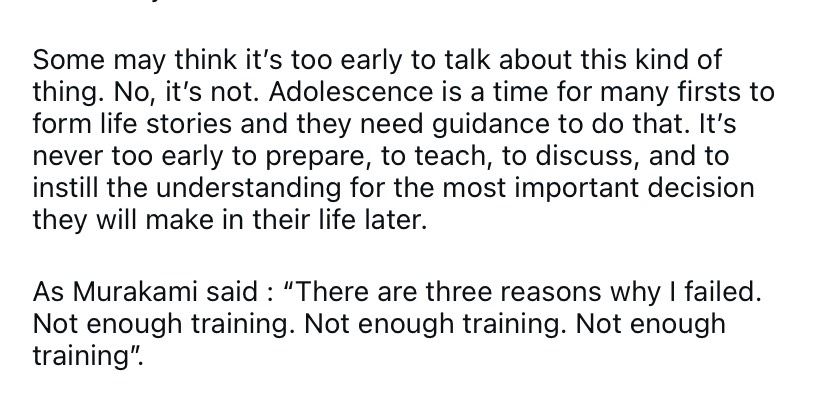
One line from Murakami keeps playing inside my head while writing this :
There are three reasons I failed. Not enough training. Not enough training. And not enough training.
Closing this with a line found in Medium :
“Writing is how to make sure your train of thought arrives at the station”.
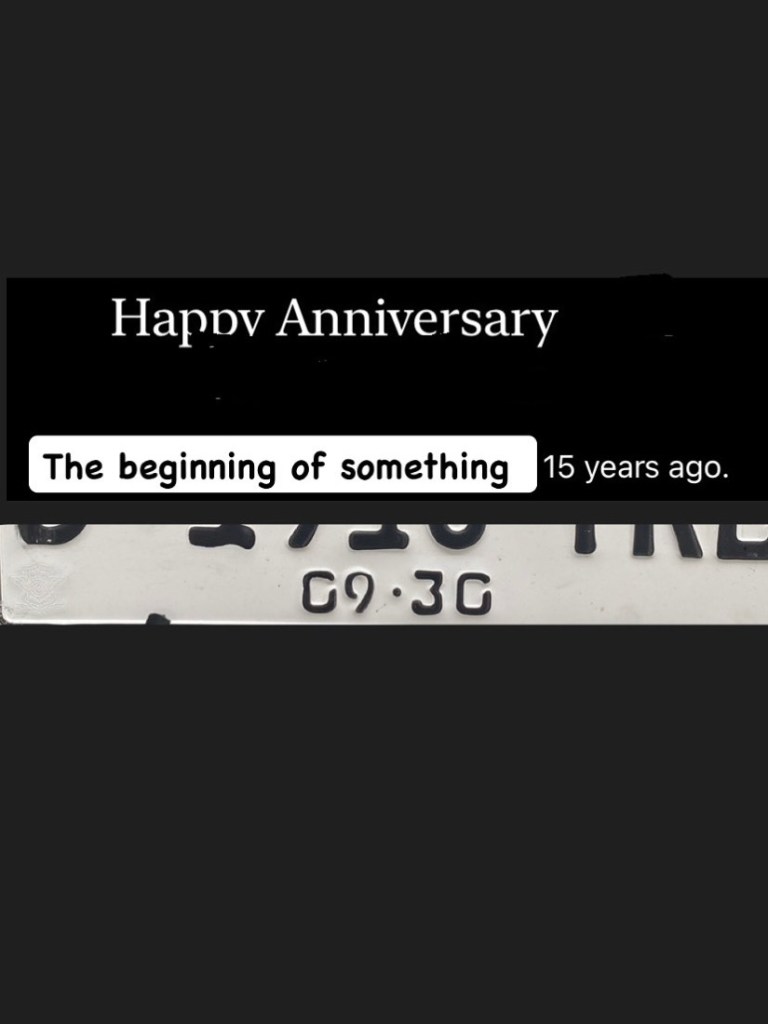
Two 15th anniversary for things that have been taking me places, witnessing many of life’s ups and downs.
Adding another two of the things that get through the years with me this month.
You know that anything new that brings us happiness will eventually adapt to a new normal, and it will slowly become our new regular, losing its spark. A book said it takes exactly 87 days for a honeymoon period to come to an end.
It’s called “hedonic adaptation.” Anything that initially brings you joy tends to lose its appeal after 12 weeks. The brain treats your new possessions/ habits/new life like expired milk.
The funny thing is, it’s only applicable for positive things. A negative experience can last for years. Trauma, destructive and painful experiences, doesn’t have an expiry date. We carry that all through the years and can still remember it fresh, no matter how much time has passed.
In such a situation, nothing and no one really makes anyone happy. So what does?
Finding novelty in consistency. The same thing that you treat as something new, periodically, regularly, over and over again.
Surviving, Taking care of, Keep maintaining the excitement, For the same things over long years, that’s the brain job. It requires thinking, not (just) feeling.
A recent event gave me another frown and uttered disbelief. It was another thing that I thought could happen in any random social media post I encountered, but to deal with this in reality, I keep questioning myself: What kind of world is this?
That was one of the passages on my previous post.
I don’t know since when, whenever something happens, something that has a direct or indirect impact on my life, something that I still have to deal with in the future, I have this constant annoyance inside to make sense of everything. Recent events on a personal level have been constantly disturbing and need to make sense.
Like Hermione, when in doubt about something, go to the library. I have been through my old reading for days and went through my gallery, where most of the contents are captured from articles I read in the past. I am also typing some questions in the learning machine. I have certain answers that I keep repeating whenever I discuss the problem with someone. But I am still not satisfied enough to stop wondering.
During sit and stare session in tahajud (this again another 4 am post), I suddenly remember one word I wrote in my latest YPM post. Then my mind jumped to another recent writing on the draft about my daughter who starts copying a certain habit of mine and elaboration of how habit and characters formed. There is also certain pinned post on my feed that I keep re-reading regarding this disturbing event because it amplifies the truth of what I wrote there.
From there, I keep connecting some of the recent conversations, looking back at some of my personal experience and some others related to me, and I start feeling a bit settled.
One phrase that could explain the event :
The absence of internalized values.
Previously, I can only make sense the behavior by calling it weak character. But then, what’s behind such weak characters that lead to certain behavior?
It must be something deeper than that. How does characters are built? Through long years of repetitions of habits. Habits can be good or bad.
Then, how does one build good characters? By doing long years of hard things.
How does habit formed? Internally : from genetics. We bring certain instilled preferences in ourself inherited by genetic from our ancestors. Externally : from our environment.
How does environment help to promote habits? Internally : Motivation and willpower Externally : System.
Some habits we carry in our genes flourish because it grows in the right environment while some failed to thrive because it doesn’t meet the right soil to grow.
I learned that we might not carry any genetics of certain habit, but, environment has enough power to perform certain habits.
Anything we have internally doesn’t really work without working on the external factors. Something that we don’t have internally might grow when there is strong pressure externally.
One of the reasons why certain schools are in high-demand because they provide everything to build good characters. The seeds are different, but with the right environment with good system, it makes bad habits have no place to grow.
So, what drives our attitude and behavior at the most basic level? It’s our beliefs and values. Values and character are deeply interconnected, with one forming the foundation and the other serving as its outward expression. Values are the beliefs and principles that guide a person, while character is the consistent demonstration of those values through behavior and habits over time.
Our core values are usually inherited from our closest people. Parents, teachers, or the bigger family. We pick our initial values from our surroundings.
Based on personal experience and seeing some results when someone becomes a fully mature adult by the end of their 30s and 40s, value transmission needs a strong connection and countless repetitions until it can be safely internalized during our formative years that persists through adulthood.
If it doesn’t take place at home, other circle with stronger connection might take the job. Friends, schools, etc.
“Adolescence is considered a critical period for the development of values and identity, when parents serve as important agents of socialization of their children (Alwin, 1984, Smith and Self, 1980, Starrels, 1992). However, parents compete with other socialization agents (e.g., peers, teachers, and media) such that adolescence marks a turning point when parental influence begins to wane (Younnis & Smollar, 1985). Adolescents begin to remove themselves from their parents’ sphere of influence and expand their own identity and values (Hoffman, 1984, Kroger and Haslett, 1988). The process of individuation accelerates as children experience important life transitions such as moving out of their parents’ home, marrying, and having children of their own, which lead to greater divergence from the values of their parents (Bucx, Raaijmakers, & Van Wel, 2010). Because timing appears to a key feature of value socialization, it is important to consider both pre- and post-adult children when studying the transmission of values between generations (Acock and Bengtson, 1980, Bengtson, 2001, Erikson, 1950, Hitlin, 2006).
Children couldn’t learn from someone who they have no connection with. No education could ever take place without connection. No values could be transferred without a strong connection.
Connection needs presence. They say quality is more important than quantity? Only true with adequate quantity first. No quality before quantity. Numbers can’t lie. Low quantity has a higher probability of low connection.
Can children from the same home and parents end up with different values? It’s very much possible. The child’s temperament, birth order, family situation, schools they attend, and things they experience growing up might all contribute to different values adopted.
How do we judge successfully transmitted values?
It’s how people behave when they have full authority over themselves. Things they do when they have all the resources on their hand. Things they do behind supervision and closed door.
The core values will also have an impact on ethics and morals.
Any behaviors an adult displays is the reflection of successful values that he adopted. Whether from home or another environment.
There is one memorable line from the current podcast I listened to from a marriage counselor :
“Value is not taught, it’s caught”.
(Deep breath)
An adult without clear values will never have clear goals in life. It is translated in every aspect of life. Living in confusion, picking up the easiest way to live, driving aimlessly until it crashes into something, the consequences of which must be handled not only by himself, but unfortunately, by others too.
Adults with unclear values even unable to internalize and own their mistake properly and do something to fix it the right way.
I never knew how scary it is before it truly happens before my eyes.
(Deep breath).
It took me few hours to finally finish this writing with countless revisions.
I think I can put my mind on ease a little bit now.
A YPM alumni posted a writing about life in YPM and it triggered more alumni to give their testimony too. I am enjoying YPM’s little reunion on the comment section while keep reflecting and being currently on the down slope of parenting.
Reading those comments make me realize few things.
Not all the students become great/famous pianist. But, all agree in one thing. The result of all the rigorous training done for years are same for everyone :
the good characters stay, Especially for those who reached certain level.
Lower grade in YPM is about building discipline, consistency, resilience, and many kind of internal characters.
Upper grade in YPM (if one is given the chance) is more about displaying years whether those characters have been successfully internalized or not.
Before grade 6, if you don’t pass, you can repeat the year. Starting grade 6, if you don’t pass : out.
The brilliant one goes directly to PK 1. The not so brilliant one (like me) goes to Pra PK. It’s like another second chance of grade 6. If you don’t pass : out.
In PK 1 – PK2, if you don’t pass all or half of the subjects, repeat the year.
PK 3 is the final destination. The end of journey.
They pick 2-3 student to be taken as teacher, if they tick all the list.
Looking back, I think, those who could proceed and survive PK years, are ones who got the characters internalized, more than the skills.
Ones who, in spite being scolded hard weekly, keep coming. Ones who might be not so talented, but keep trying. Ones who keep juggling between task and challenges, they give their all to finish it,no matter the result.
Evening Replass is where we have play in front of others, being criticized openly and bluntly. Twice a week, From 7pm-12 am. It might sound weird, but, I have never seen an empty Repclass room even during school exam, like final test or even UAN. They don’t choose between school or YPM. They embrace both responsabilities equally.
Having/doing/surviving YPM in my formative years, it’s like a ‘shortcut’ to be a functional adult.
The most significant tangible result is nothing written on the paper, but when I look around my peers and realized I was entering 20s fully ready to deal with the most uncertain period of adulthood.
because I am good, but because I have been trained to deal with whatever adult should deal with.
Adults :
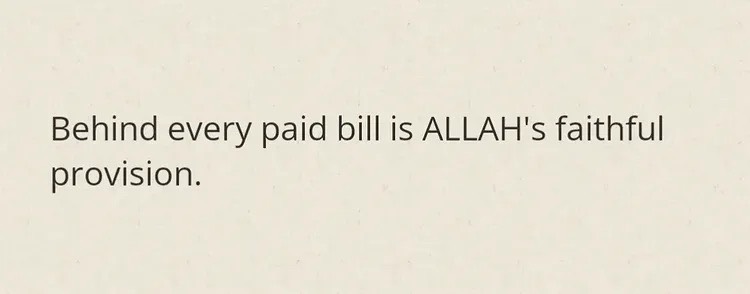
Pay their own bills.
Doing multiple roles.
Doing things we don’t like, but we have to.
Having clear goals and know how to achieve it.
Saying no to many things that doesn’t align with the goals, be it job offers or marriage proposals (plurals).
Fully aware that good life comes with price and willing to pay for it.
It’s certainly not because who I am. It’s the works that many people do for me in my formative years and YPM was the huge part of it.
Working and volunteering with the 20s for the past few years, I see it as one way to paying forward for all the hardwork done on me.
Succesful education can be considered by two characteristics : competency and character.
In YPM, they nailed both.
Closing this with one of the most favorite quotes from a book :
“Teachers (and great education) affect eternity. No one can tell where their influences stops”.
The past few days, life gave me huge lessons about few things. Or maybe show me some test to my character.
It showed me how reactive I am. How quick I was jumping into conclusions.
It showed me how much improvement needed regarding my communication skills.
It showed me no matter much I think I know what to do, at certain point, I will be slipped.
It showed me the complexities of raising a child. No matter how much I think I know about my child, there will be more than I don’t know and teach me those I don’t know through certain circumstance that doesn’t make sense.
I feel humiliated, embarrassed, disappointed, stupid, all level of shame from the lowest to the highest. On the other side, I feel confused, worried, defeated, and extremely exhausted. It has been countless session of talking inside the head and tears flowing suddenly. Even when I am currently writing this.
This is actually the real life test to certain thing that I seem to understand during learnng, so it gives me a chance to see how much I understand when it happens in real life, not through others, but first hand experience.
But, this also one of the moments of confirmation how precise Allah’s timing for everything. While facing this lesson, He let me deal with it ‘alone’ to make sure I am the one who get the lesson.
I wrote to the smallest details at the beginning of the year. It happened again this time. Been wondering why it kept delaying while for the past few months it has been consistently on time. It came at the right time to remove some of obligations while dealing with huge commotion.
Other than the emotions mentioned above, there’s one thing that gives me some light :
The amount of courage that helped me get through this. Years spent training this trait through doing hard things and decision making, turned out to be the most useful while dealing with turbulence in life.
Another thing I realized, we, as human, will never be done with ourself until the end. When we think we have done with ourself, then another layer will be peeled, whether we like it or not. Onion peeling event would always sting in the eye.

 A Penny for My Pensieve